Easy Ways to Keep Your Mind and Body Strong as You Age
June 8, 2023
Hospice Vs Palliative Care: Key Differences For Hampton Roads Families Planning Home-Based Care
June 8, 2026Key Points:
- Hospice care at home in Hampton Roads is comfort-focused support for people with a life-limiting illness who want care where they live.
- Services often include pain relief, equipment, medicines, and caregiver education.
- Medicare may cover hospice care when a patient meets eligibility rules.
Big care decisions often come during a hard week, not a calm one. If a loved one is getting weaker, eating less, or going back and forth to the hospital, hospice can bring comfort, support, and a clearer plan.
Hospice care is for people with a life-limiting illness who want comfort-focused support where they live. Instead of trying to cure the illness, comfort-focused support focuses on managing pain, symptoms, and daily needs while supporting the family.
What Hospice Care at Home in Hampton Roads Means for Families
Hospice care at home in Hampton Roads provides medical oversight for comfort when curing an illness is no longer the goal. The priority becomes pain relief, symptom control, and dignity for the patient, along with help for the people caring for them each day.
Hospice is more than basic home care. While general care helps with daily tasks, hospice adds a medical team to help the family understand what to expect.
According to Medicare, this usually requires a doctor to certify a life expectancy of six months or less, a choice for comfort care over curative treatment, and a signed statement choosing the benefit. This care can happen in a private home or wherever the person lives.
When Families May Start Asking About Hospice at Home
Many people think hospice is only for the last few days, but starting the conversation earlier gives everyone more time to ask questions and settle into a routine. You might consider hospice if you notice:
- More time spent in bed
- Frequent hospital or emergency room visits
- Harder symptom control at home
- Less interest in food or daily activity
- A desire for comfort rather than more treatments
Earlier support is helpful because many families wait until a crisis to reach out. While the average hospice stay is 88.6 days, the median stay is only 21 days, meaning many people miss out on weeks of available help. Asking, “What is hospice care at home?” sooner helps everyone learn what care looks like before things become urgent.

What Services Families Can Expect From Hospice at Home
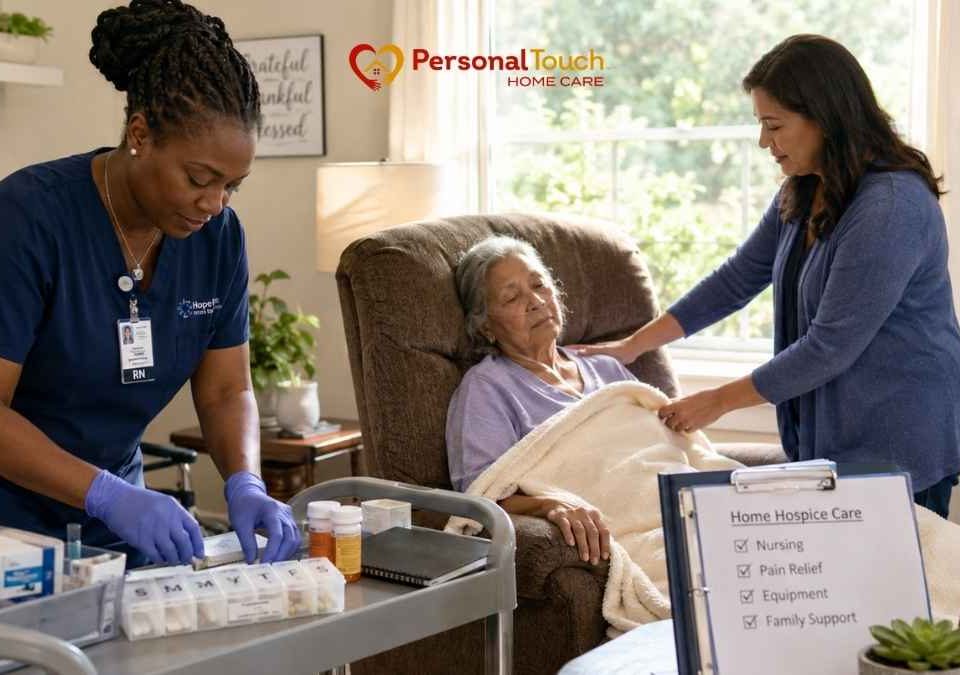
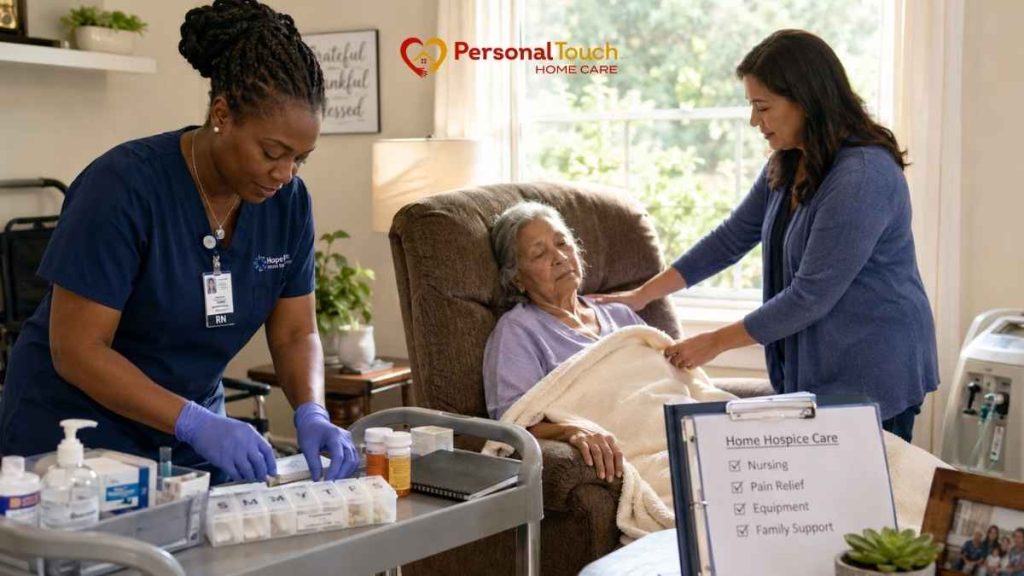
Hospice at home includes medical care, comfort support, and family guidance based on the patient’s needs. Families can usually expect:
- Nurse and doctor support, including 24/7 on-call help when needed
- Pain and symptom management
- Prescriptions for pain and comfort
- Medical equipment like hospital beds or walkers
- Supplies like bandages or catheters
- Hospice aide support
- Social work and emotional support
- Family education and volunteer help
This care is designed to happen where the patient is most comfortable. In 2024, 98.8% of Medicare hospice days were billed as routine home care, the most common hospice care level.
How In-Home Hospice Care Hampton Roads VA Supports Family Caregivers
One of the biggest misconceptions about in-home hospice care in Hampton Roads VA is that families have to do it all alone. The skilled nursing team is there to teach you:
- What changes to watch for
- When to call the nurse
- How to provide comfort care day to day
- How to use medicines and equipment
- What to do if symptoms change
This support includes emotional care and help finding local resources when caregiving responsibilities become harder to manage.
What Medicare May Cover and What Families May Still Pay For
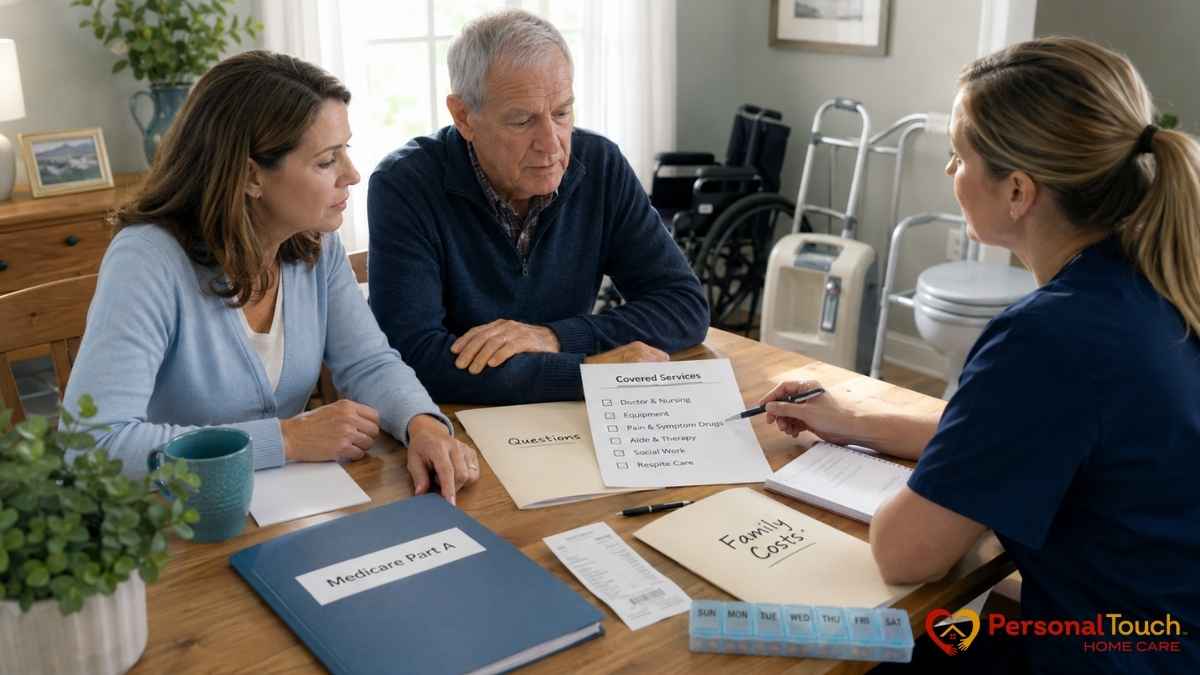
Medicare Part A (Hospital Insurance) generally covers hospice care related to the terminal illness. This includes:
- Doctor and nursing services
- Medical equipment and supplies
- Drugs for pain and symptom control
- Aide and therapy services
- Social work support and grief counseling
- Short-term inpatient or respite care
Some small costs may apply, such as a copayment of up to $5 for certain prescriptions or 5% of the cost for respite care. Room and board at home or in a facility is generally not covered unless the hospice team arranges for short-term inpatient care.
Why Home Hospice Care Often Feels More Manageable for Families
Staying in familiar surroundings can lower stress and make daily life feel calmer. Home hospice brings the medical support to the patient, so families feel less alone while keeping life centered at home.
This is a common choice for many families. In 2024, 1.91 million Medicare beneficiaries used hospice care for at least one day, and 53.1% of Medicare decedents received hospice care at the time of death. That shows how common end of life care at home in Tidewater VA and similar hospice support have become for people who want comfort-focused care.
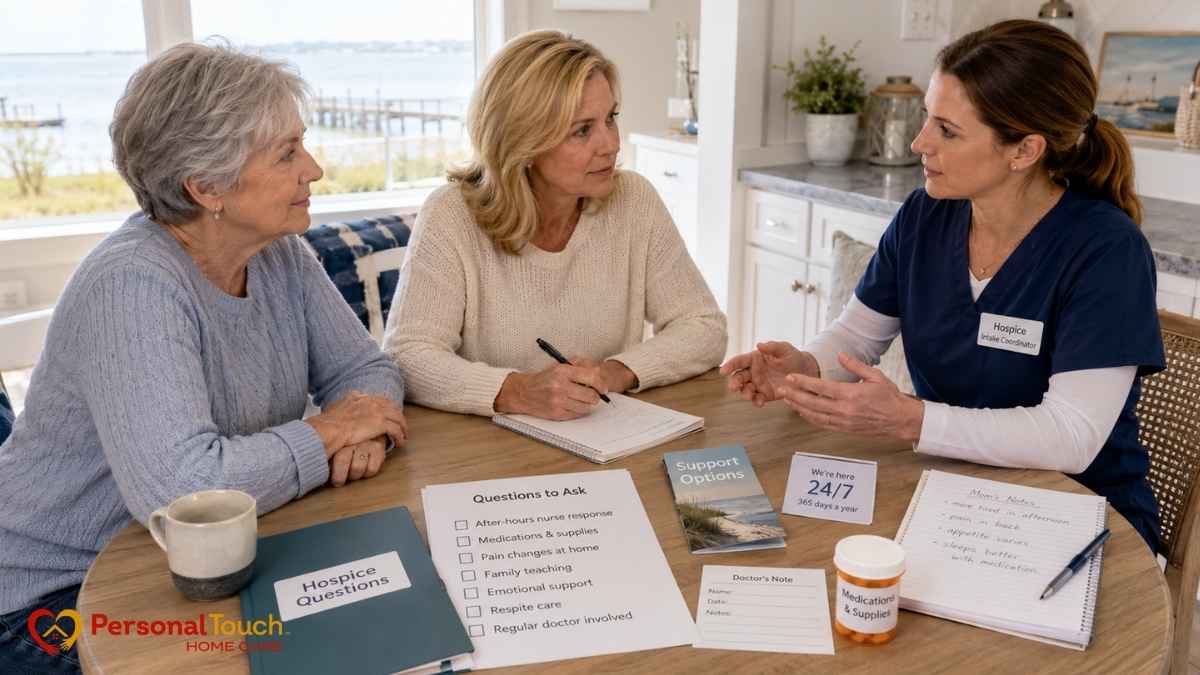
Questions to Ask Before Choosing a Hospice Provider in Hampton Roads
Asking a few direct questions can help you choose the right team:
- How fast can a nurse respond after hours?
- Which medications and supplies are handled by the hospice team?
- How are pain changes managed at home?
- Who teaches the family what to watch for?
- What emotional or spiritual support is available?
- How are respite or short-term inpatient needs handled?
- Can the patient keep their regular doctor involved?
Keeping a regular doctor is often possible. Medicare allows you to choose your own attending medical professional for hospice care.

FAQs About Hospice Care at Home in Hampton Roads
Can someone stop hospice care if they change their mind?
Hospice care can be stopped if a patient changes their mind. Medicare allows a patient to leave hospice at any time and return to treatment for the terminal illness. A patient may also choose hospice again later if they still meet the rules.
Can hospice care happen in assisted living or a nursing home?
Yes. Hospice is provided wherever the person lives, including facilities or inpatient centers when necessary.
Can a regular doctor still be involved after hospice starts?
Yes. Patients can continue seeing their regular doctor or nurse practitioner as their attending professional.
Choose Comfort and Support Close to Home
Hospice at home can bring comfort, care, and steadier help to the whole family during a difficult time. Hospice gives loved ones a way to spend meaningful time together in a place that feels familiar.
At Personal-Touch Home Care, we help families understand care options that may support comfort, symptom relief, family questions, and changing care needs at home, depending on the services available in your area.
If your family is considering hospice for someone you love, contact our nearest office. Our team can talk through your questions, explain available home care options, and help you understand what the next step may look like.