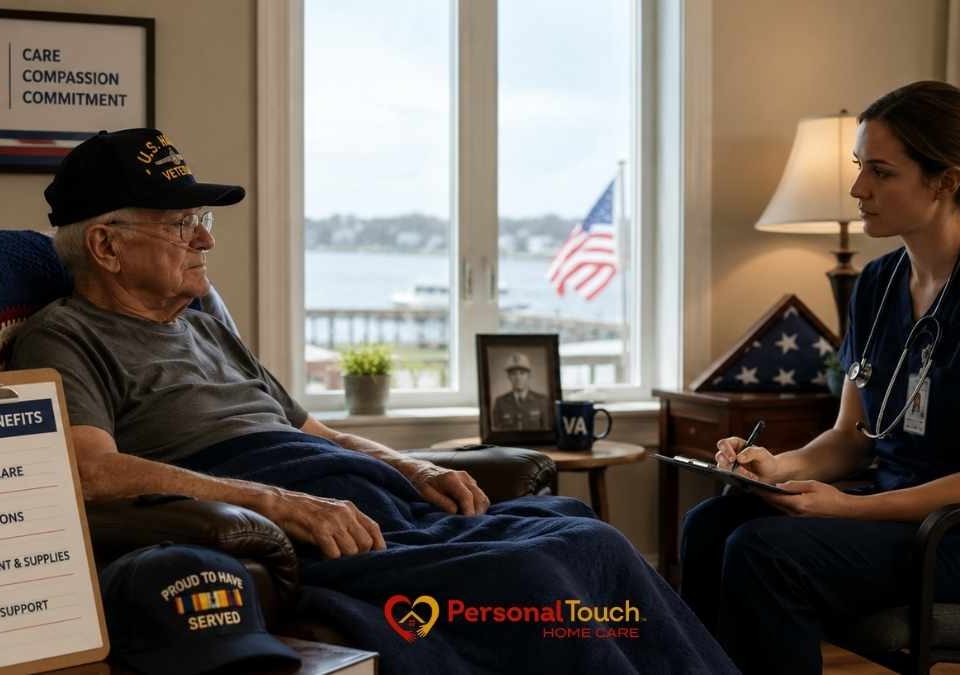
VA Hospice Benefits in Hampton Roads: Who Qualifies and What It Covers
June 22, 2026Key Points:
- What does hospice care at home include? Hospice care at home usually includes comfort care, symptom relief, and family support.
- Common services include nursing visits, aide help, medication support, emotional care, and a care plan that adjusts as needs change.
- Hospice also helps families understand what to expect and when to call for extra support.
When a serious illness is managed at home, it is natural to have questions right away. Who is going to help? What will the care look like? How is pain managed every day? These worries are common when comfort becomes the priority.
What does hospice care at home include for most families? It involves comfort care in a familiar setting, help with symptoms, and support for loved ones. A care team visits regularly to check on how things are going as needs change. The focus is not on a cure. Instead, the goal is to help the person feel peaceful, relaxed, and fully supported in their own home.
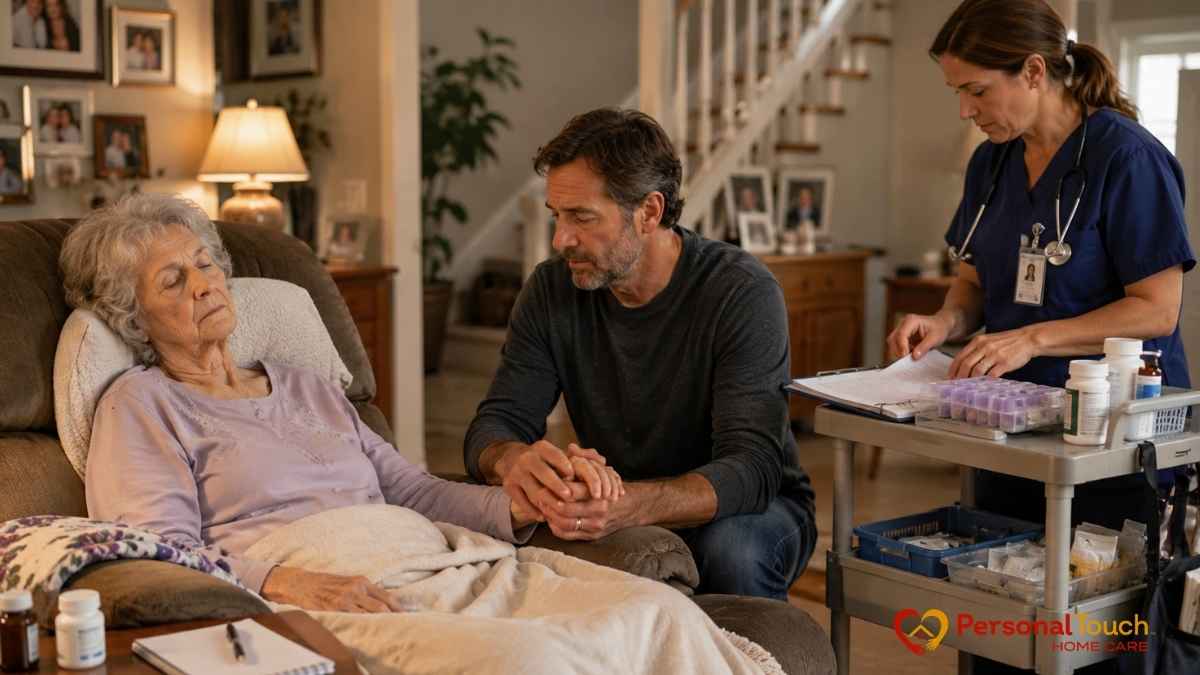
What Does Hospice Care at Home Include?
Hospice care at home focuses on comfort, symptom relief, and quality of life for those with a serious illness. Staying in a familiar place often helps things feel less stressful. Providers like Personal-Touch Home Care offer hospice and palliative care in the comfort of home, including nursing, pain management, emotional support, and family guidance.
This is a common choice for families. In 2024, 1.82 million Medicare beneficiaries received hospice services, which shows how common this type of care has become for people near the end of life.
Hospice Care at Home Services Families May Receive
No two care plans are exactly the same. Services depend on a person’s condition and goals, but most plans include a mix of help. Common home hospice services may include:
- Nursing visits. Nurses check on symptoms, track pain, teach families about medications, and update the plan if a condition changes.
- Home health aide support. Aides can help with personal care like bathing and dressing.
- Medical social work. Social workers offer emotional support, help with family talks, and assist with paperwork.
- Therapy services. Physical, occupational, or speech therapy may be used when they match the person’s goals.
- Palliative care connection. Palliative care may begin earlier while treatment continues. Hospice uses palliative care principles when comfort becomes the main goal.
Most people choose to stay in their own space for this care. In 2024, 98.8% of Medicare-covered hospice days were routine home care days, which shows how central the home is to the experience.
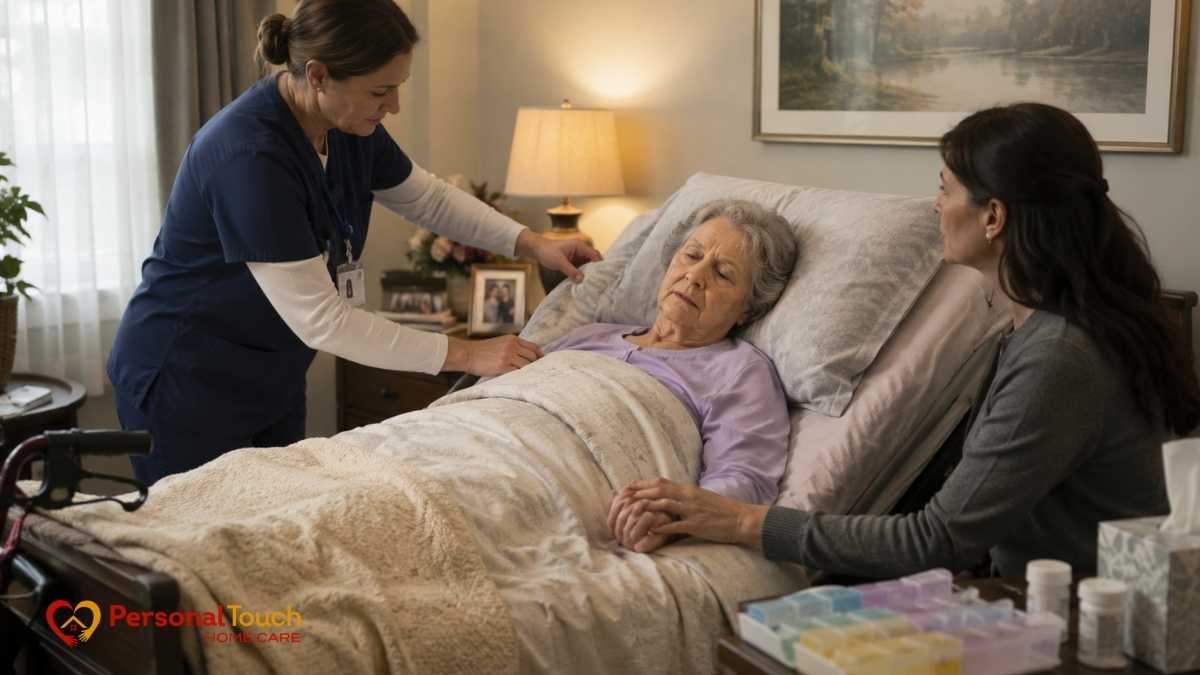
How Pain Relief and Comfort Support Work at Home
Pain relief in hospice is active care. It is not a wait-and-see approach. The team watches symptoms closely and adjusts the plan to keep the person as comfortable and alert as possible.
Nursing support often includes regular check-ins and teaching families when to call for help with:
- Pain
- Breathing trouble
- Nausea
- Restlessness
- Anxiety or discomfort
Good hospice pain management often tries to keep the person as comfortable and alert as possible based on their condition and wishes. Comfort may look different from one person to another. Some people may want stronger relief even if they feel sleepy. Others may prefer a different balance. A care plan can be adjusted around those goals.
What Does Hospice Care at Home Include for Pain Relief?
Pain relief at home often includes skilled nursing support, symptom review, medication support, and a faster response when pain or other symptoms change. Medicare’s hospice benefit covers nursing care and medications used for pain and symptom control.
How the Care Team Supports Family Members Too
A home care plan helps more than just the patient. Support for loved ones is a large part of making care feel manageable. Since nearly 1 in 4 adults in the United States provides ongoing care for someone with a medical condition or disability, hospice programs include family support in hospice care.
The team helps families understand:
- What changes to watch for
- When to call the team
- How to give simple comfort care
- Who to contact after hours
That support can also include emotional support and help with difficult conversations. Medical social work may help families sort through practical concerns, while nursing staff may teach basic care steps in a clear way.
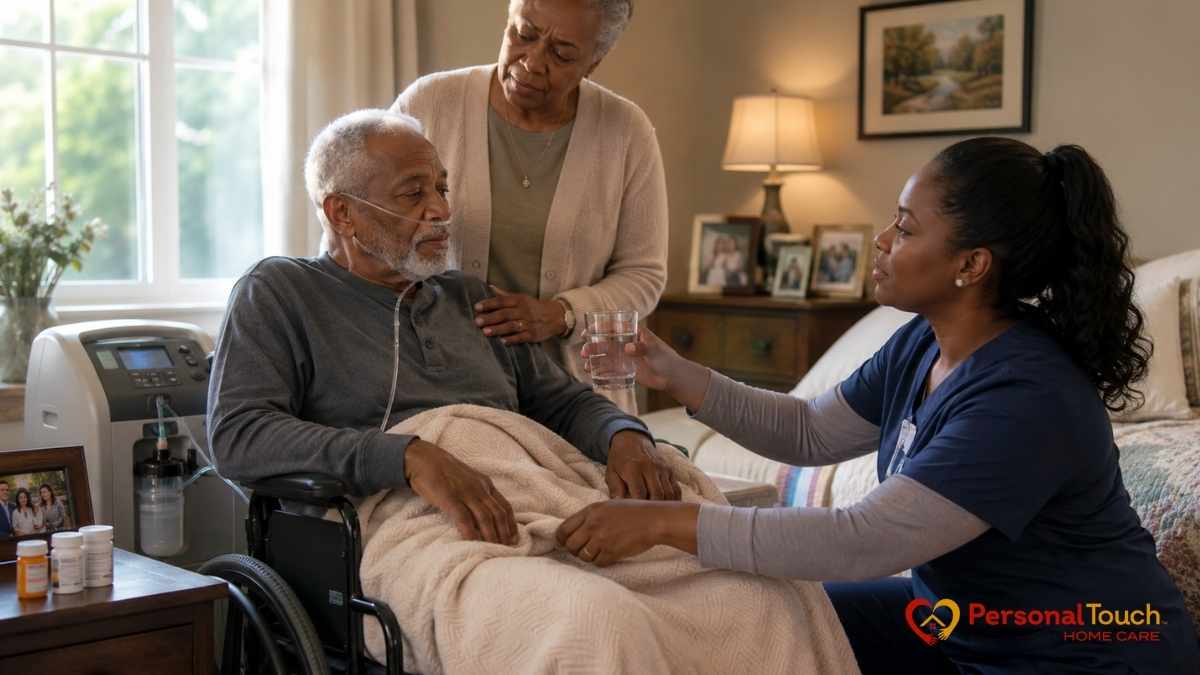
Hospice and Palliative Care Are Close, but Not the Same
The question of hospice vs palliative care comes up often because both focus on comfort. The difference between hospice and palliative care is usually about timing.
Palliative care can be given while treatment for an illness is still going on. Hospice is a type of palliative care used when the focus is entirely on comfort.
That difference can help families understand why both service lines may appear on the same provider page. A company may offer palliative care earlier in the illness and hospice later, depending on the person’s needs and medical situation.
What the First Days of Home Hospice May Look Like
The first days of in-home hospice care often focus on getting everyone on the same page. The team will ask about goals, who is helping at home, and what support is most urgent. Medicare requires hospice care to follow a plan of care created by the hospice team based on the person’s illness, related conditions, and care needs.
Early visits usually include:
- A review of comfort needs
- A talk about medications and supplies
- A plan for who to call during changes
- A written care plan built around the patient
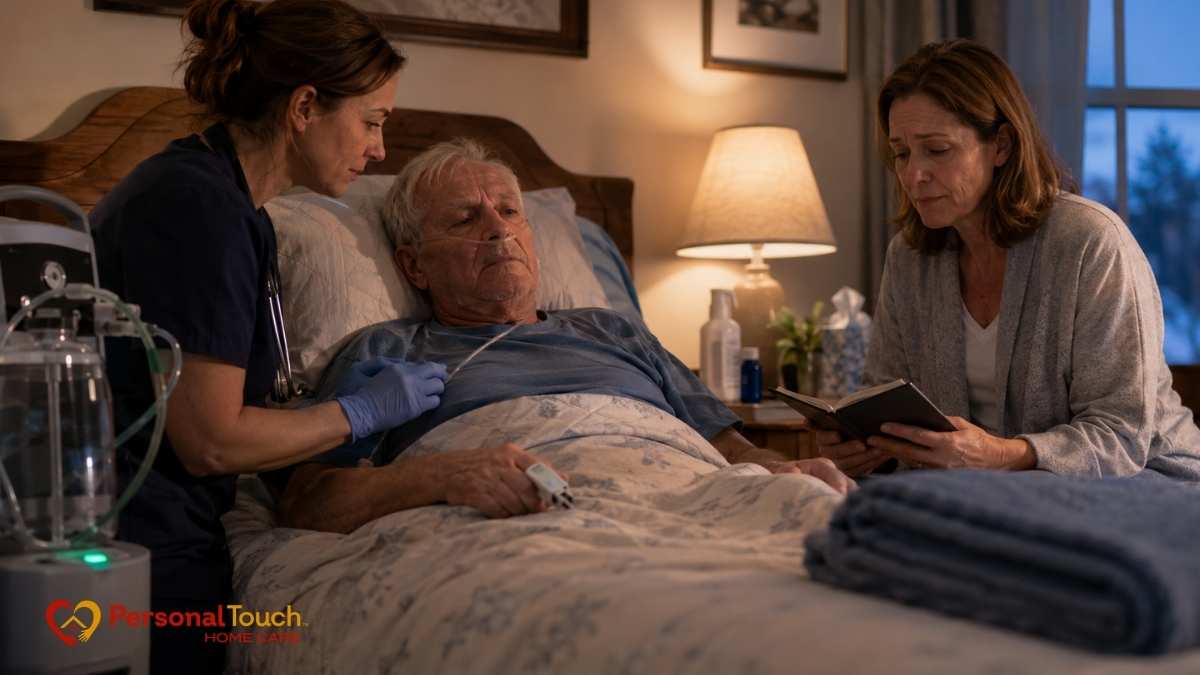
FAQs About Hospice Care at Home
Does hospice care at home include 24/7 care?
Routine hospice usually does not mean a nurse or aide is at the bedside 24/7. The hospice team can be contacted for support, and higher levels of care may be available for short-term symptom crises when the person qualifies.
Can someone stay in hospice longer than six months?
Yes. If a person still meets eligibility rules, they can stay on hospice. Medicare starts with two 90-day periods and then allows an unlimited number of 60-day periods as long as the person is recertified.
Can you keep your regular doctor while in hospice?
Yes. A person can keep their regular doctor involved as the attending clinician while the hospice team coordinates the rest of the care.
Speak With a Home Hospice Team That Can Help
Home hospice can include more support than many families expect. Comfort care, symptom relief, nursing support, emotional care, and family teaching may all be part of a care plan provided at home.
At Personal-Touch Home Care, we provide hospice and palliative care in the comfort of home. Our team can help your family understand what support may be available for pain relief, daily care, caregiver questions, and changing needs.
One call can help you talk through timing, available services in your area, home support needs, and the next steps that may fit your loved one’s situation. Contact us to speak with a care team near you.